

 5 min of reading
5 min of reading
5 min of reading
Foreign drones over Poland. Where did they come from and why?
Foreign drones over Poland. Where did they come from and why?
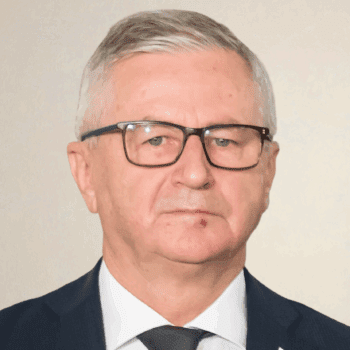

The President of Poland has publicly declared that Polish troops will not be sent to Ukraine. Just before that, Germany backed out of some commitments within the so-called “coalition of the willing.” And now, last night, allegedly Russian drones from Ukrainian territory crossed the border. This is no coincidence. [graphic]

Manipulation
Manipulation
- On the night of September 9–10, foreign drones entered Polish airspace. On the same day, President Karol Nawrocki stated that he would not support sending Polish soldiers to Ukraine. But this was nothing new – Nawrocki and other Polish government officials had already made similar statements before (e.g., 1, 2, 3).
- As for Germany, questions remain about how far it will go in supporting Ukraine (e.g., 1, 2, 3). However, the German government’s spokesperson confirmed Berlin’s readiness to provide Ukraine with security guarantees after a ceasefire, while stressing that decisions on potential military involvement would be made “at the right time”.
- This does not support Skalik’s claim that Ukraine staged a provocation by sending drones into Poland. Reliable evidence shows that the drones were Russian – confirmed both by debris found in Poland (1, 2) and by radar data (1, 2).
- Skalik took a few facts, twisted them, and presented a false conclusion that Ukraine was to blame. That’s why his statement is classified as manipulation.
NASK warns of disinformation. MP Skalik is amplifying it
The narrative that Ukraine is trying to “drag” Poland into war with Russia is a well-known and well-documented element of Kremlin propaganda (e.g., 1, 2, 3).
According to the NASK Disinformation Analysis Center, numerous false claims have been spreading since the drone incident on the night of September 9–10. One of them suggests the attack was carried out by Ukraine in response to Poland’s refusal to send troops – but this has no basis in fact.
Włodzimierz Skalik, an MP from the Confederation of the Polish Crown, echoed this line in a Facebook post that was submitted to us for verification. His message aligns with the goals of Putin’s Russia and feeds into its false narratives.
Russian drones over Poland? No evidence of Ukrainian involvement
The drones entered Polish airspace during a Russian strike on Ukraine. Evidence shows the drones that crashed in Poland were Russian, not Ukrainian. The remains were identified as parts of the Gerbera – an unarmed decoy drone modeled on the Iranian Shahed and built in Russia.
Both Defense Minister Władysław Kosiniak-Kamysz and Prime Minister Donald Tusk confirmed the drones’ Russian origin (1, 2). It was established that some of them were launched directly from Belarus.
Jacek Tarociński, an analyst at the Center for Eastern Studies (OSW), pointed out that when drones approach from Ukraine, their routes can be tracked in full. NATO, Poland, and Ukraine all operate long-range early warning systems.
“We were able to see almost the entire flight paths of these drones in real time, starting in Russia,” Tarociński explained. NATO operational logs described by Die Welt confirm this.
Could Russian drones fly that far? Extra fuel tanks may explain it
Some proponents of the “Ukrainian drones” theory argue that the drones couldn’t have come from Russia because their range is too short.
But according to Mariusz Cielma, editor-in-chief of Nowa Technika Wojskowa (eng.: New Military Technology), the Gerbera normally has a range of about 600 km, which can be extended significantly with simple modifications.
He added that photos and prosecutors’ reports showed the drones that fell in Poland were not fitted with warheads or surveillance equipment. This made them lighter, which extended their range. Experts also suggested that the drones may have been equipped with additional fuel tanks.
Poland and Germany won’t send troops. Was this Ukraine’s “punishment”?
Skalik tried to link the drones’ entry into Poland with political decisions. On September 9, President Karol Nawrocki, while in Finland, reaffirmed that Poland would not send troops to Ukraine.
But again, this was not a policy change – Nawrocki and government officials had said the same before (1, 2, 3). And it certainly isn’t evidence that the drones were a Ukrainian provocation. The facts outlined above disprove that.
Skalik also pointed to doubts about Germany’s role. After the September 4 “coalition of the willing” meeting, Süddeutsche Zeitung described Chancellor Friedrich Merz’s position as inconsistent, suggesting a retreat from firm commitments. Some Polish outlets amplified this (e.g., 1, 2).
Officially, however, Berlin declares its readiness to provide Ukraine with security guarantees after a ceasefire, while stressing that any decisions on possible military involvement have not yet been made and will be taken only “in due course”.
Where did MP Skalik’s map come from? Not an official source
In his post, Skalik included a map from the Telegram channel @Ukrainian_Intelligence. The channel’s authors claim their information is verified for security purposes but admit it is not an official source.
The September 9–10 drone incident is only partly reflected on this map. According to the caption, it shows “the situation regarding UAV attacks in Ukrainian airspace as of 1:16 a.m.” Only the following map gives the full picture, showing drones flying from Russia into both Poland and Belarus.
Russia deliberately, thoughtfully, and with specific intentions attacked Poland with drones. This is, without a doubt, a completely conscious strategy. To test the “system of possible Western responses” and prove that it does not exist. To shock Ukraine’s European partners,… pic.twitter.com/rhk6ylRTwT
— Михайло Подоляк (@Podolyak_M) September 10, 2025
*If you find an error, highlight it and enter Ctrl + Enter

RECOMMENDED